 Jun 24, 2026
Pool Camera Additions for a High-Rise Condo: Closing Security Gaps Around New Amenity Spaces
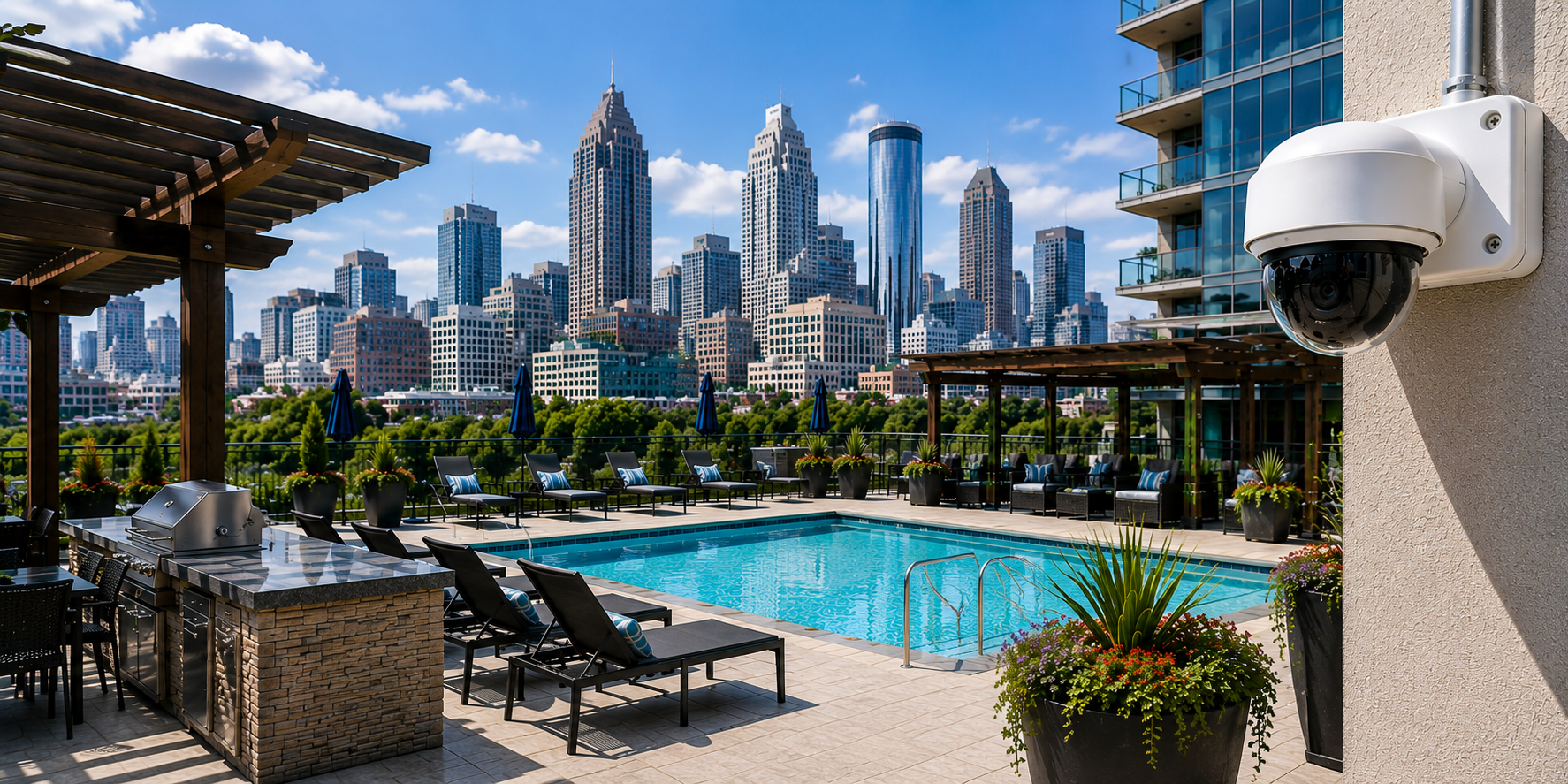
When a high-rise condominium adds or improves an amenity space, the security system needs to keep up. A pool deck that once had simple sightlines can become more complex after new pergolas, grills, furniture, shade structures, or gathering areas are added.
That was the case at one of Atlanta’s highest high-rise condo properties. The community had invested in its pool and outdoor amenity area, but the changes created new visibility concerns. Existing cameras no longer gave management the full picture.
The project was not about adding cameras for the sake of adding cameras. It was about ensuring the property had the right coverage in the right places, integrated with the existing system, with minimal disruption to residents.
Why Pool Camera Additions Matter in High-Rise Condo Communities
Pool areas carry a different type of risk than many other parts of a condominium property. They are resident-facing, heavily used during certain seasons, and often accessed outside normal office hours. They also create liability concerns when incidents happen, and there is no clear record of what occurred.
For a high-rise condo, the pool is not just an amenity. It is a shared operating environment that management must keep safe, orderly, and well-documented.
Common concerns include:
- After-hours activity
- Rule enforcement issues
- Slip-and-fall or injury claims
- Guest access concerns
- Damage to furniture, grills, gates, or equipment
- Resident disputes
- Blind spots caused by new structures or landscaping
In this case, the property sought better visibility across the pool deck and surrounding amenities. The goal was full, useful coverage without creating unnecessary monitoring noise or invading privacy.
New Amenities Can Create New Camera Blind Spots
A camera system that worked five years ago may not work after an amenity renovation. That is one of the most common issues in multi-tenant residential communities.
Pergolas, grills, cabanas, planters, umbrellas, and seating areas can all change how a camera sees the space. A camera that once provided a clear view across the deck may suddenly be blocked by a post, a shade structure, or a new gathering area.
At this Atlanta high-rise condo, the new amenity layout created visual obstructions and coverage gaps. The property needed a practical review of what the existing cameras could and could not see, and where additional cameras would provide the most value.
That kind of evaluation is important because more cameras do not automatically mean better coverage. Poorly placed cameras can still miss key activity, capture unusable angles, or create unnecessary storage and network load.
Planning Camera Coverage Around Actual Use
Good additions to a pool camera start with how the space is actually used.
The questions are straightforward:
What needs to be seen?
The board and property management needed coverage of the areas where residents and guests gather, move, enter, and exit. That included the pool deck, new amenity features, and areas where activity had previously been hard to verify.
What does not need to be seen?
Pool camera placement also requires judgment. Cameras must avoid inappropriate views into private areas, neighboring units, locker rooms, restrooms, or spaces where residents have a reasonable expectation of privacy.
When does activity matter most?
For many communities, the concern is not constant live viewing. It is the ability to review relevant activity in real time when something happens. That may include after-hours use, unauthorized access, damage, complaints, or safety incidents.
For this project, the goal was efficient visibility: capture useful activity without overwhelming management with unnecessary footage.
Integrating With the Existing Avigilon System
This project was an extension of the property’s existing Avigilon camera system. That mattered because the added cameras needed to work within the community’s current security environment rather than becoming a separate, disconnected system.
For high-rise condo communities, integration is often the difference between a useful upgrade and another system for staff to manage.
A properly planned camera addition should consider:
- Existing camera recording capacity
- Network switch and PoE availability
- Cabling pathways
- Camera licensing
- Storage requirements
- Viewing permissions
- Remote access needs
- Monitoring station layout
- Long-term maintenance
Because the property already had an established platform, the new pool cameras could be integrated into the same operational workflow. Staff would not have to learn a separate system or check multiple platforms to review incidents.
Infrastructure Still Determines the Success of the Project
Camera selection gets attention, but infrastructure determines whether the system performs reliably.
In high-rise buildings, low-voltage pathways are rarely simple. Cable routes may be limited. Amenity areas may have finished surfaces, structural constraints, weather exposure, and resident activity that limit when work can be done.
For pool camera additions, the infrastructure review is especially important because the environment places additional stress on the system. Outdoor cameras must be selected and installed with sun, rain, humidity, glare, nighttime visibility, and long-term exposure in mind.
A high-rise condo pool deck may also require careful coordination around mounting locations. Cameras need stable attachment points, clean cable protection, proper weatherproofing, and angles that produce usable footage.
The success of the project depends on matching the camera plan to the building's conditions, rather than forcing a generic design onto the property.
Minimizing Disruption in an Active Amenity Area
Pool areas are sensitive work zones because residents notice disruption immediately. A project that blocks access, creates noise during peak times, or leaves visible unfinished work can quickly become a management headache.
For this installation, the work was coordinated to minimize interruption to pool operations and resident use. That is especially important in condominium environments, where property managers already balance resident expectations, vendor access, board priorities, and daily operations.
Good execution in an amenity space means planning around:
- Resident usage patterns
- Safe work areas
- Access control requirements
- Clear communication with management
- Clean installation practices
- Limited downtime
- Weather conditions
- Final camera testing before closeout
The smoother the installation, the less burden falls on the property manager.
The Immediate Benefit: Fewer Security Gaps
Once the cameras were added, the property had stronger visibility across the pool and amenity area. The main benefit was simple: the known security gaps were closed.
That improves day-to-day operations in several ways. Management can review incidents more efficiently. Security teams can verify activity with better context. Boards have stronger documentation when questions arise. Residents gain confidence that common areas are being managed responsibly.
For high-rise condo communities, that kind of visibility supports both safety and stability. It does not replace staff judgment or sound policies, but it provides the property with better information when decisions need to be made.
Pool Camera Additions Should Be Part of Lifecycle Planning
Camera additions should not be treated as one-off fixes forever. They should fit into a broader lifecycle plan for the building’s security and network infrastructure.
That is especially true for high-rise condos, where systems are often expanded over time. A camera here, a door reader there, a new switch later, and eventually the property ends up with a fragmented system that is harder to support.
A better approach is to align camera upgrades with long-term planning. That includes reserve studies, phased replacements, amenity renovations, access control improvements, network capacity reviews, and ongoing service needs.
Pool camera additions can be an immediate project, but they should still answer long-term questions:
Will the existing recording system support future cameras?
Adding a few cameras may be simple today, but repeated additions can eventually strain storage, licensing, or server capacity.
Are network switches and PoE budgets being tracked?
Camera reliability depends on network health. Undersized or aging switches can create problems later.
Are camera locations documented?
Future service becomes easier when camera locations, cabling routes, IP addresses, and system details are properly documented.
Does the property have a phased plan?
High-rise communities often benefit from spreading upgrades over time rather than waiting for a system failure.
What Other High-Rise Condo Boards Should Know
The main lesson is that amenity changes should always trigger a camera coverage review.
When a pool deck, clubroom, garage, lobby, package room, or outdoor space changes, the camera system may no longer match the property’s risk profile. Waiting until after an incident often leads to rushed decisions and reactive spending.
High-rise condo boards and managers should treat camera coverage as part of operational readiness. The goal is not to overbuild. The goal is to make sure the property can see what matters, protect resident privacy, support incident review, and maintain a reliable system over time.
For communities with existing platforms like Avigilon, that also means planning additions in a way that preserves consistency. A clean expansion is easier to support than a patchwork of separate products, viewing portals, and undocumented wiring.
A Practical Closing Thought
Pool camera additions are most effective when planned around the building, residents, amenity layout, and the management team’s actual operating needs. For high-rise condo communities, that kind of planning reduces blind spots, supports safer common areas, and helps property managers carry less technology burden day to day.